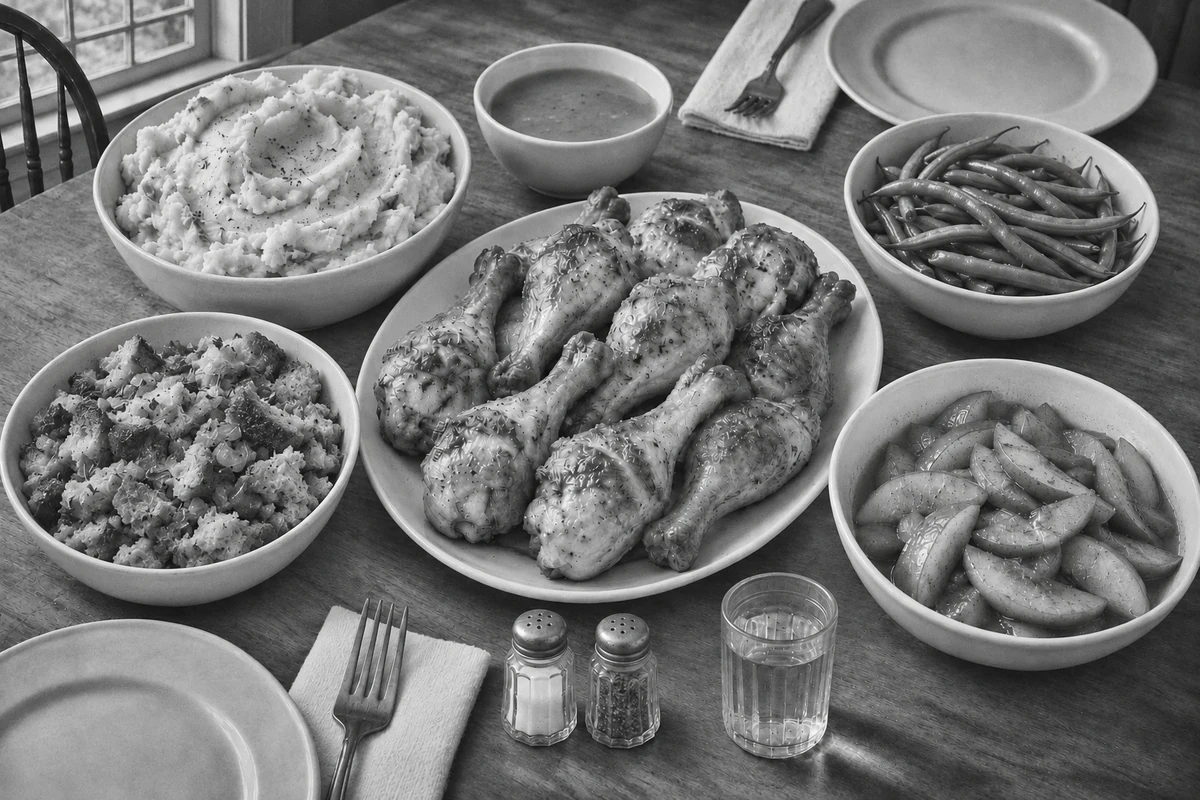
A reimagined table from a century ago.
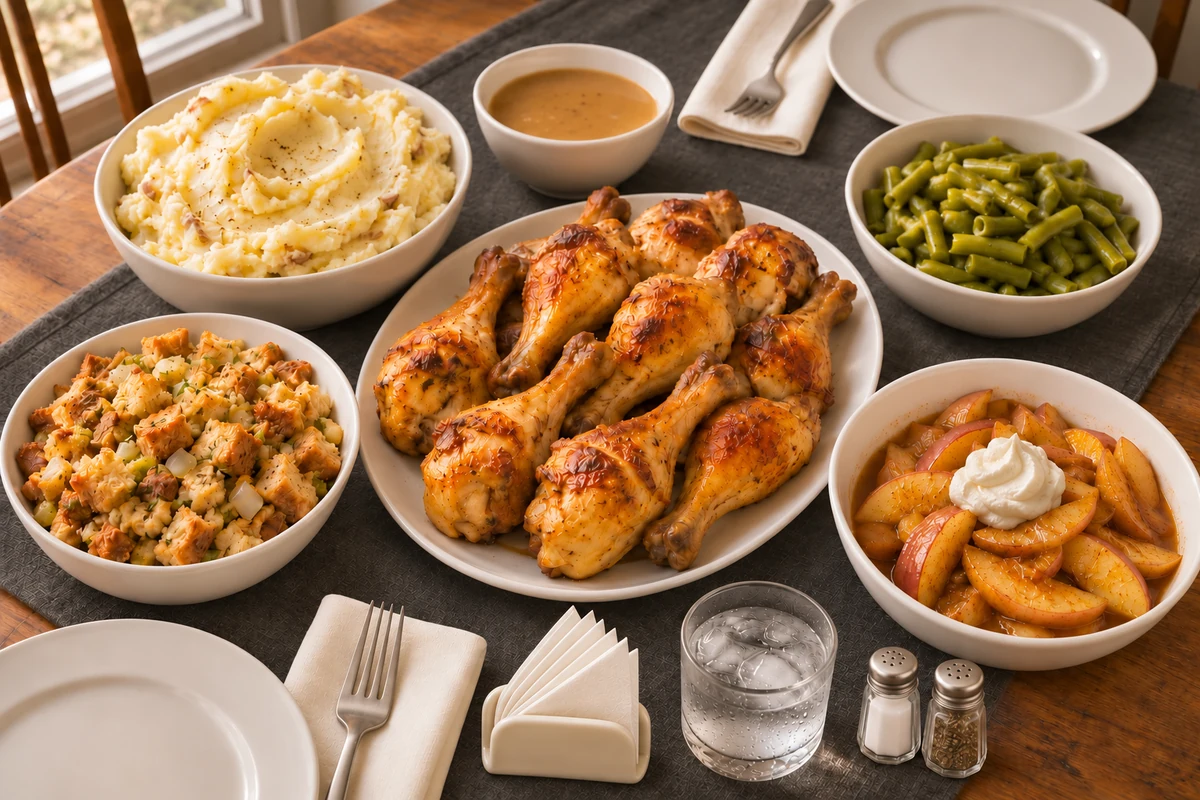
The same dinner on a present day table.
He Still Set Her a Plate
My great grandfather liked his Thanksgiving dinner the way he always had it. He wanted what he wanted, and when we went to his house for Thanksgiving, we knew exactly what would be on the table. Chicken, mashed potatoes and gravy, stuffing, green beans, and cinnamon apples. Water to drink.
My great grandmother made that dinner while she was alive. After she passed, he took over the cooking. Year after year, he made the same meal. Long after she was gone, he still set a plate for her.
That’s the part I remember most. I used to think he kept the menu because he didn’t like change. When I think about that plate now, I wonder if keeping dinner the way she made it was one of the ways he kept her close.
I wanted to see what it would cost to serve that dinner a century apart. Using grocery prices from 1926, I estimate about $2.30 for six. Today I can plan it for about $21 with pantry staples on hand and ice water from home. The prices are a hundred years apart, and I can still make the dinner I remember.
See what it cost over the years · Get the $21 shopping list and recipes
What traditions, if any, have been passed down in your family that you still carry on today?
Maybe it’s a dish, a place you still set, or something your family does every year. Share your tradition on the question board.
1906 · Before the price timeline
Birth cohort · Greatest Generation
I start here to honor the generations who came before me. I picture a cook tearing bread for stuffing and saving the chicken drippings for gravy. It gives me a place to begin the family story before the century of prices starts in 1926.
What it might have cost to feed six
The generation beside each year applies to someone born that year. The family column honors the people who took turns at our table.
| Year and birth cohort | At the family table | Estimated total |
|---|---|---|
| 1926 Greatest Generation | My great grandparents’ generation | $2.30 |
| 1946 Baby Boomers | The family table in the years between | $3.25 |
| 1966 Generation X | My mother’s generation | $3.25 |
| 1986 Millennials | A daughter carries it forward | $10 |
| 2006 Generation Z | A son takes a turn in the kitchen | $12.50 |
| 2026 Generation Beta | My turn to set the table | $21 |
Between the stops: The Silent Generation was born from 1928 to 1945, between the 1926 and 1946 price snapshots. Generation Beta is a newer label that McCrindle uses for births from 2025 to 2039.
Pew birth cohorts · Census birth cohorts · McCrindle generation ranges
These are estimates in the dollars people paid at the time. The family scenes are a tribute to the generations that fed us. The dates mark stops along the price timeline.
1926 · My great grandparents’ generation
A four pound roasting chicken would have cost about $1.61 at the federal average. A November grocery ad in Washington, D.C., offered six pounds of Delicious apples for a quarter. Three pounds at that rate would have been about 13¢. Add potatoes, canned green beans, bread, and onion, and the basket comes to about $2.30.
Federal retail averages · November apple ad · Canned bean ad
1946 · The family table in the years between
Federal prices put a four pound roasting chicken at about $2.28, and a Michigan Thanksgiving ad offered two cans of green beans for 31¢. The bread stuffing could be made by hand, and the drippings from the roast could go straight into the gravy.
1966 · My mother’s generation
When I think of my mother’s table, I picture someone tasting the gravy before it ever reaches the table. In 1966, four pounds of chicken came to about $1.68 at the August retail average, three pounds of apples about 75¢, and potatoes about 23¢. Add about a quarter for bread and onion and 33¢ for two cans of green beans at a Thanksgiving sale, and the total lands near $3.25.
The two baskets land near the same total in 1946 and 1966. In the prices I used, chicken was cheaper in 1966, while the apples and potatoes together cost more.
1986 · A daughter carries it forward
By this point, a daughter making dinner could bring home a box of stuffing and a packet for the gravy. The drumsticks still went into the oven. At the November average for bone in chicken legs, four pounds came to about $5.07. With potatoes, apples, stuffing, green beans, and an allowance for gravy mix, the basket was about $10.
Chicken prices · Potato prices · Apple prices · Green bean ad · Stuffing ad
2006 · A son takes a turn in the kitchen
By the time a son takes his turn at the stove, the grocery list still looks familiar. Four pounds of chicken legs cost about $4.84, three pounds of potatoes about $1.55, and three pounds of apples about $3.27. With roughly $2.85 for stuffing, beans, and gravy, the table comes to about $12.50.
Chicken prices · Potato prices · Apple prices · 2006 stuffing benchmark · 2009 sale used as a guide for beans and gravy
2026 · My turn to set the table
Today, I can budget $21 for roast drumsticks, mashed potatoes and gravy, stuffing, green beans, and cinnamon apples for six. I’ll set out a pitcher of ice water and put the grocery money toward dinner. When I pass the gravy, I’ll be thinking about the people who fed us before it was my turn.
How I estimated the prices
I priced the same servings using federal averages and period grocery ads wherever possible. Earlier versions use a whole chicken and bread stuffing with pan gravy. Later versions use drumsticks, stuffing mix, and prepared gravy or a mix. Some package prices are scaled to the amount needed. The 1986 gravy cost is an allowance, and the 2006 canned beans and gravy use a later sale as a guide. Every estimate assumes pantry staples and water from home. The comparison shows grocery cost in each year’s dollars. Comparing affordability would also take household wages and purchasing power into account.